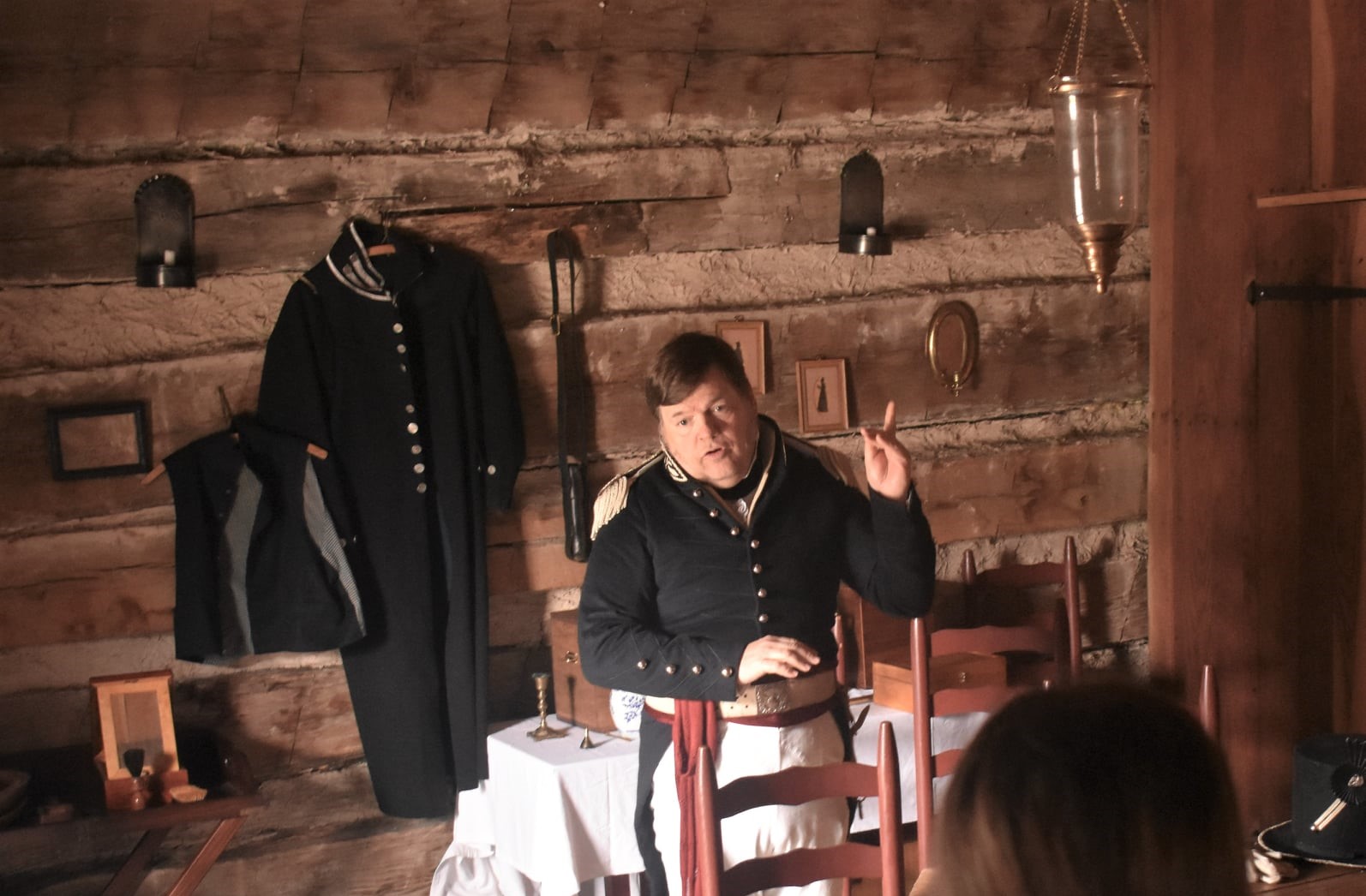
“Major Whistler had two German cooks and they prepared us dinner… Our dinner consisted of one fine turkey, a side of venison, boiled ham, vegetables in abundance, cranberries, and green currents. As for dessert, we had none… There were but three bottles of wine sent here from Cincinnati; but one was made use of. Then there were a few toasts, and, after three guns and music, they went into the fort and the ladies changed their dresses. Then Major Whistler called for the music, which consisted of one bass drum, two small ones, one fife, violin and flute.”[5]
[1] The ‘Brevet’ prefix indicates that Whistler was serving in the capacity of a major, but was in reality only a captain (the rank below major). This practice was common in the Army’s early days, as officers were needed to run the countless forts across the nation but the government could not afford to pay them all at their full rates. Monthly Return of the Garrison of Fort Wayne, May, 1814, Returns from U.S. Military Posts: 1800-1916, National Archives roll 1400.
[2] Joseph Pennell and Elizabeth Robins Pennell, The Life of James McNeill Whistler, (United Kingdom: J.B. Lippincott, 1911), 3.
[3] Charles Poinsatte, Outpost in the Wilderness: Fort Wayne, 1706-1828 (Fort Wayne: Allen County - Fort Wayne Historical Society, 1976), 73.
[4] John Whistler to Captain W Betton, Brigade Inspecter, 4 November 1815.
[5] As quoted in Poinsatte, Outpost in the Wilderness: Fort Wayne, 1706-1828, 75.
[6] See letter from John Whistler to Adjutant Inspector General, 5 November 1815.
[7] Charles Larrabee, Thoughts on Peace and War, (United States: Press of Case, Tiffany and Burnham, 1845) 63.
[8] Poinsatte, Outpost in the Wilderness: Fort Wayne, 1706-1828, 80.
[9] Monthly Return of the Garrison of Fort Wayne, January, 1817, Returns from U.S. Military Posts: 1800-1916, National Archives roll 1400.
[10] Poinsatte, Outpost in the Wilderness: Fort Wayne, 1706-1828, 80.
[11] Poinsatte, Outpost in the Wilderness: Fort Wayne, 1706-1828, 81.