Silhouette of Little Turtle
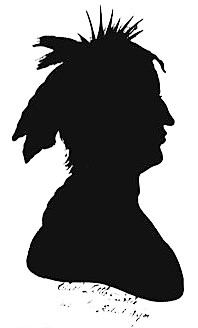
1 media/little turtle silhouette_thumb.jpg 2023-03-14T20:19:27+00:00 Cory Balkenbusch 1813df9caeea31c6742588d0733c7e303d399f25 4 1 Likely the most accurate depiction of Mihšihkinaahkwa (Little Turtle), this silhouette portrait was done in 1798 by Robert Wyer. plain 2023-03-14T20:19:27+00:00 Wikimedia Commons Cory Balkenbusch 1813df9caeea31c6742588d0733c7e303d399f25This page is referenced by:
-
1
2023-01-11T18:44:54+00:00
Unwelcome Neighbors: Kiihkayonki and the new Fort, 1794-1800
6
miami first fort
plain
2023-05-21T17:29:50+00:00
Years of American incursions had wrought significant destruction to Kiihkayonki, but it remained a prominent Myaamia (Miami) village even following the construction of Fort Wayne. Myaamia (Miami) life had been put into turmoil by the defeat at Fallen Timbers. Land that had been successfully defended against invasions by Harmar, St. Clair, and countless other smaller raids, was now directly occupied by U.S. troops. There was a flurry of activity to make up for the loss of crops that had been experienced over the last several harvests, while key leaders prepared to negotiate with U.S. officials.
Civil life for the Myaamia (Miami) was governed by separate men’s and women’s councils that provided leadership for all activities within the community. Decisions that had major consequences for all, like the planning of war and peace, were handled by both councils.[1] The first decision that needed to be made was what to do about the new American Fort constructed next to Kiihkayonki. To Myaamia (Miami) leadership it was clear that the fighting was over. In fact, many had advocated for peace even before the Battle of Fallen Timbers. One of the most influential voices in this debate was Mihšihkinaahkwa (Little Turtle), an experienced military leader amongst the tribes of the old Northwest. Considering his lengthy and successful life fighting back American invasions, the reasons for his change of heart are complex and mostly lost to the historical record. What is known is that conversations with William Wells, his son in law, gave Mihšihkinaahkwa (Little Turtle) an understanding of the strength of the U.S. network of forts and smaller outposts.[2]
Mihšihkinaahkwa was born around 1747, but little about his childhood or exactly who his parents were is known today. His childhood was spent around the headwaters of the Maumee and Eel Rivers, earning his place amongst the Myaamia leadership after defeating the expedition of Augustin de la Balme in 1780. Mihšihkinaahkwa’s victories against Harmar and St. Clair taught the U.S. government to recognize the strength of the Myaamia and their allies. Even following the defeat at Fallen Timbers, he still held the respect of much of the tribe and was key in negotiating the next steps for the Myaamia-U.S. relationship: the Treaty of Greenville.[3]
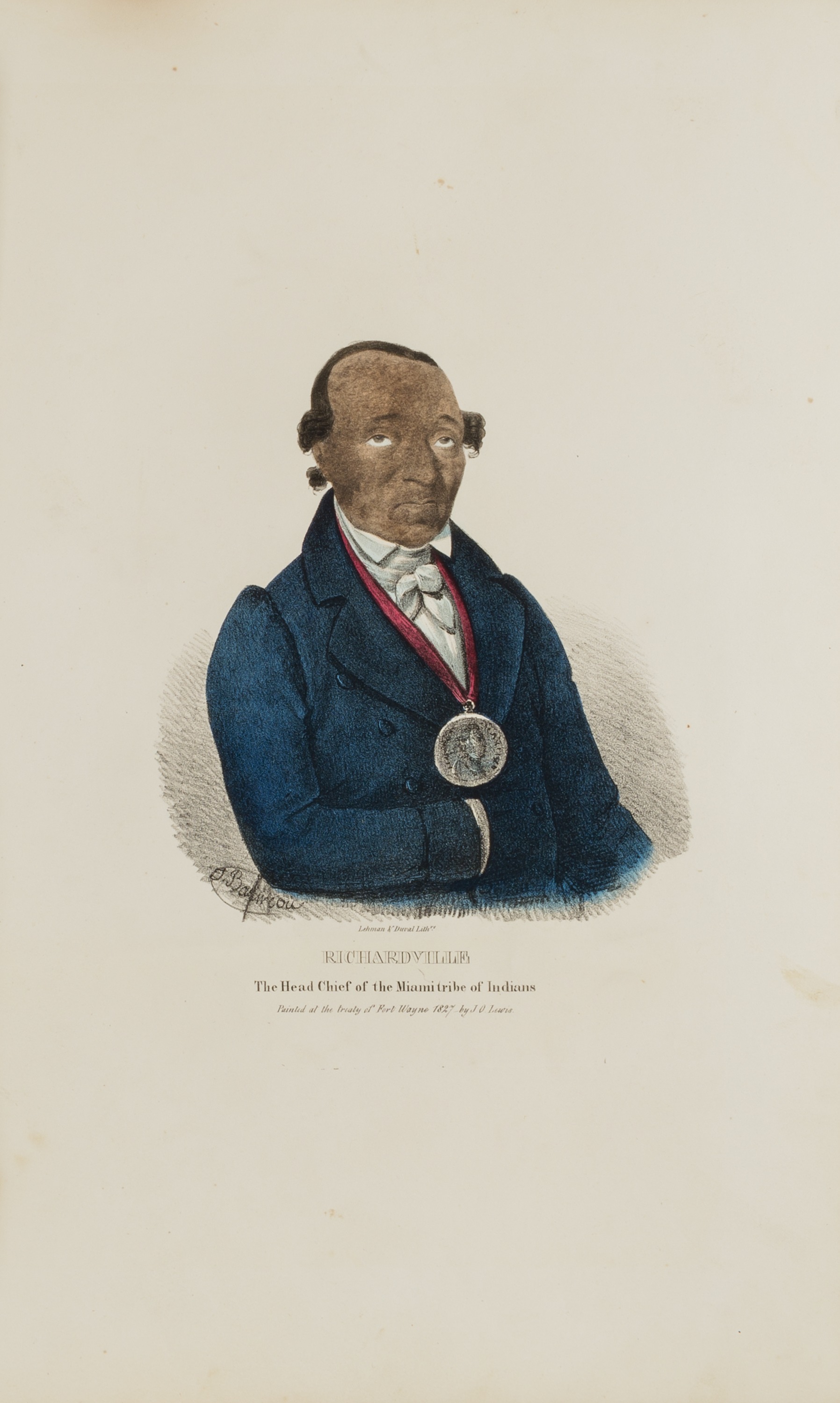
Primary negotiations would begin in June of 1795 after an initial round of talks in the winter prior, involving another key figure in Kiihkayonki’s story at the time: Pinšiwa (Jean Baptiste Richardville). Pinšiwa was born in Kiihkayonki around 1761 to Joseph Drouet de Richardville and Taucumwah. Joseph had been a merchant amongst the Myaamia for some time, but left the area in 1770 for Canada. Richardville would be raised by both his parents, traveling between Kiihkayonki and Canada, where he attended school. Well educated and experienced at trade, Richardville would begin to play an important part amongst the Myaamia at Kiihkayonki. He fought alongside Mihšihkinaahkwa at the defeat of de la Balme, but does not seem to have been a part of the fight against later American invasions. Instead, Richardville used his influence to secure peace and trade agreements with the Americans, signing the Treaty of Greenville.[4]
Where negotiations would actually take place was a point of much discussion. The Myaamia wanted negotiations to take place at Fort Wayne due to its proximity to Kiihkayonki and their other villages, along with the villages of their allies. This is also where the war fire had initially been kindled amongst the tribes. The U.S. and Wayne wanted the discussions to be held at Greenville. Wayne argued this was for symbolic reasons, since there had been no fighting at Greenville and therefore no blood spilled on the ground. In reality, it was much less of a burden on the Army’s supply chain to hold it at Greenville and less possibility of renewed hostility so far from the other Native American villages.[5]
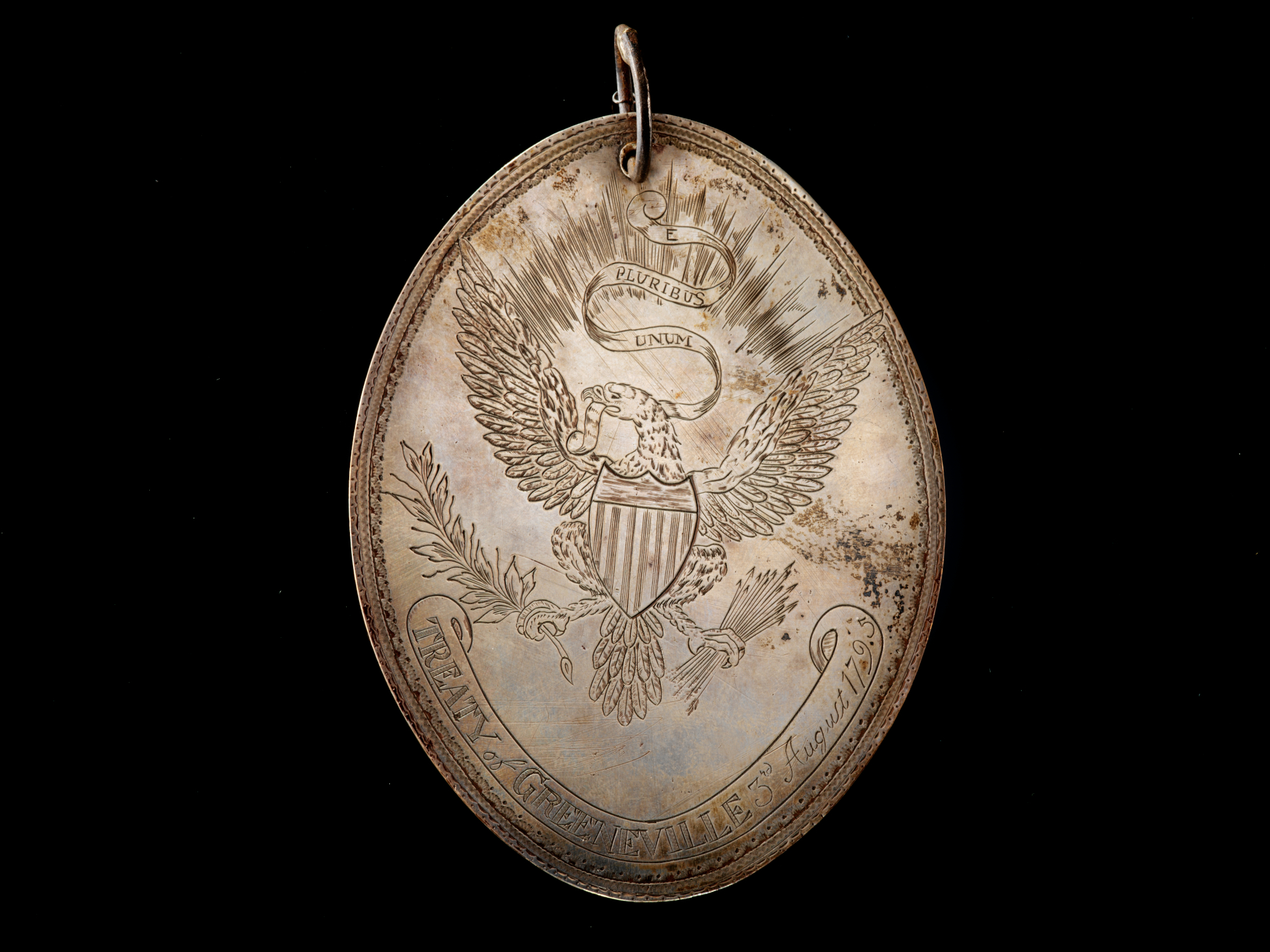
The Treaty at Greenville ceded the land that Kiihkayonki stood on, in addition to several other key points, directly to U.S. control:The general boundary line between the lands of the United States and the lands of the said Indian tribes, shall begin at the mouth of Cayahoga river, and run thence up the same to the portage, between that and the Tuscarawas branch of the Muskingum, thence down that branch to the crossing place above fort Lawrence, thence westerly to a fork of that branch of the Great Miami river, running into the Ohio, at or near which fork stood Loromie's store, and where commences the portage between the Miami of the Ohio, and St. Mary's river, which is a branch of the Miami which runs into lake Erie; thence a westerly course to fort Recovery, which stands on a branch of the Wabash; thence southwesterly in a direct line to the Ohio, so as to intersect that river opposite the mouth of Kentucke or Cuttawa river. And in consideration of the peace now established; of the goods formerly received from the United States; of those now to be delivered; and of the yearly delivery of goods now stipulated to be made hereafter; and to indemnify the United States for the injuries and expenses they have sustained during the war, the said Indian tribes do hereby cede and relinquish forever, all their claims to the lands lying eastwardly and southwardly of the general boundary line now described: and these lands, or any part of them, shall never hereafter be made a cause or pretence, on the part of the said tribes, or any of them, of war or injury to the United States, or any of the people thereof.
And for the same considerations, and as an evidence of the returning friendship of the said Indian tribes, of their confidence in the United States, and desire to provide for their accommodations, and for that convenient intercourse which will be beneficial to both parties, the said Indian tribes do also cede to the United States the following pieces of land, to wit…
5) One piece six miles square, at or near the confluence of the rivers St. Mary's and St. Joseph's, where fort Wayne now stands, or near it.
6) One piece two miles square, on the Wabash river, at the end of the portage from the Miami of the lake, and about eight miles westward from fort Wayne…
And the said Indian tribes will allow to the people of the United States a free passage by land and by water, as one and the other shall be found convenient, through their country, along the chain of posts hereinbefore mentioned; that is to say, from the commencement of the portage aforesaid, at or near Loromie's store, thence along said portage to the St. Mary's, and down the same to fort Wayne, and then down the Miami, to lake Erie; again, from the commencement of the portage at or near Loromie's store along the portage from thence to the river Auglaize, and down the same to its junction with the Miami at fort Defiance; again, from the commencement of the portage aforesaid, to Sandusky river, and down the same to Sandusky bay and lake Erie, and from Sandusky to the post which shall be taken at or near the foot of the Rapids of the Miami of the lake; and from thence to Detroit. Again, from the mouth of Chikago, to the commencement of the portage, between that river and the Illinois, and down the Illinois river to the Mississippi; also, from fort Wayne, along the portage aforesaid, which leads to the Wabash, and then down the Wabash to the Ohio. And the said Indian tribes will also allow to the people of the United States, the free use of the harbors and mouths of rivers along the lakes adjoining the Indian lands, for sheltering vessels and boats, and liberty to land their cargoes where necessary for their safety.[6]Mihšihkinaahkwa remained adamant throughout the negotiations is a desperate bid to protect the homelands of his people. Yet personal matters caught up with him, as his wife died on August 2nd in the midst of the meetings. Because of this, Mihšihkinaahkwa did not sign the final version of the treaty until after all the other assembled chiefs had. With this signing, he agreed to never fight the Americans again.[7] Mihšihkinaahkwa’s reputation earned him an audience with both Presidents George Washington and John Adams, touring the sites of Philadelphia while impressing federal officials with his insight and adamance in defending the rights of the Myaamia. Mihšihkinaahkwa would return to live in what remained of Kiihkayonki along with a small number of Myaamia.[8]
Richardville also continued to work closely with Mihšihkinaahkwa and the Americans. For Richardville, the motivation was twofold. His control over several trading posts along the region’s rivers enabled hime to make large profits and improve the lives of his tribe. Richardville was also recognized as the chief of the Myaamia by the U.S. government, giving him much more power in negotiating new deals. His influence remained a constant in the coming decades.[9]
The Myaamia and the federal government’s efforts to bring them into the fold of ‘white civilization’ will be highlighted more in the next section on Kiihkayonki.[1] George Ironstrack, “The Good Path,” Myaamia Center of Miami University, last modified November 1, 2011, https://aacimotaatiiyankwi.org/2011/11/01/ the-good-path-part-i/.[2] George Ironstrack, “The Mihši-maalhsa Wars – Part IV,” Myaamia Center of Miami University, last modified May 19, 2014, https://aacimotaatiiyankwi.org/2014/05/19/the-mihsi-maalhsa-wars-part-iv/.[3] George Ironstrack, “Mihšihkinaahkwa – A Brief Biography of ‘Little Turtle’,” Myaamia Center of Miami University, last modified January 20, 2020, https://aacimotaatiiyankwi.org/2020/01/20/biography-of-little-turtle/.[4] Frederick E. Hoxie, Encyclopedia of North American Indians, (Boston: Houghton Mifflin Company, 1996), 549.[5] George Ironstrack, “The Treaty of Greenville (1795) – Part I,” Myaamia Center of Miami University, last modified October 13, 2016, https://aacimotaatiiyankwi.org/2016/10/03/the-treaty-of-greenville-1795-part-1/.[6] “The Treaty of Greenville 1795,” Avalon Project, Lillian Goldman Law Library, Yale Law School. https://avalon.law.yale.edu/18th_century/greenvil.asp.[7] William Heath, William Wells and the Struggle for the Old Northwest, (Norman: University of Oklahoma Press, 2015), 233-234.[8] Heath, William Wells and the Struggle for the Old Northwest, 235-248.[9] Hoxie, Encyclopedia of North American Indians, 550.