Uniforms of the Legion of the United States
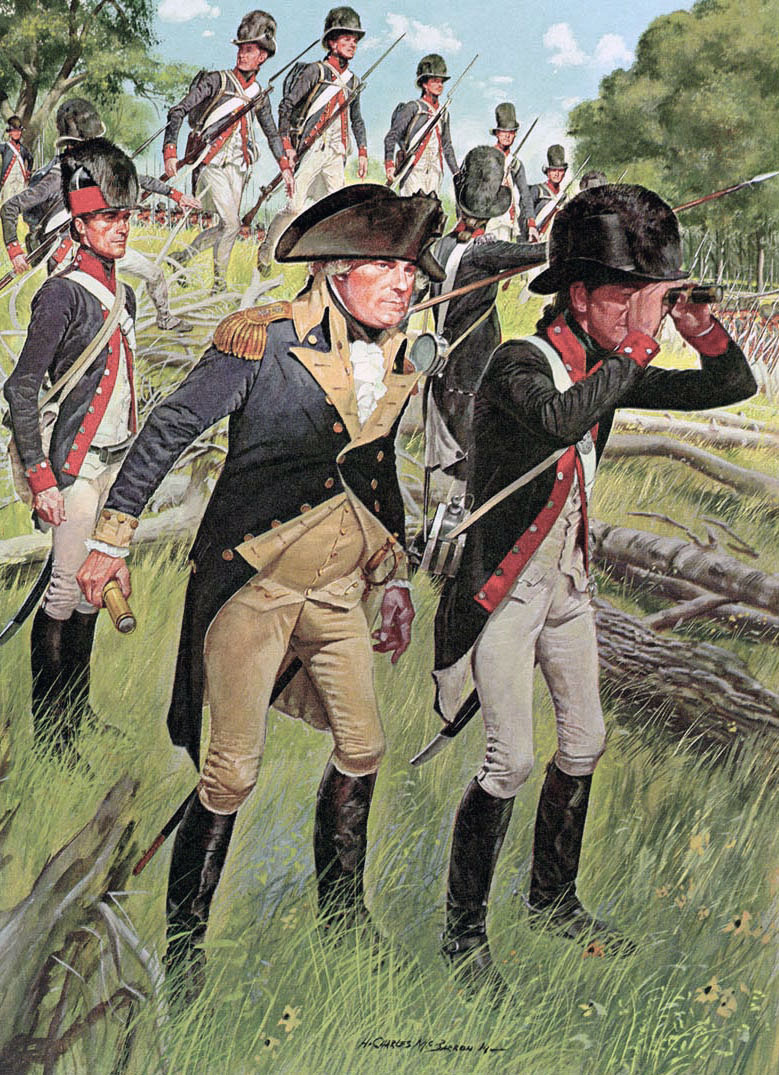
1 media/Waynes Legion Uniforms, Charles McBarron, The American Soldier Collection, U.S. Army Center of Military History_thumb.jpg 2023-02-15T18:32:50+00:00 Cory Balkenbusch 1813df9caeea31c6742588d0733c7e303d399f25 4 2 In the forefront in the tan and blue uniform is Anthony Wayne, surrounded by soldiers of the Legion. On the left can be seen a dragoon while the rest of the figures are infantrymen. Illustrated by Charles McBarron plain 2023-04-11T13:50:19+00:00 The American Soldier Collection, U.S. Army Center of Military History Cory Balkenbusch 1813df9caeea31c6742588d0733c7e303d399f25This page is referenced by:
-
1
2023-02-14T20:04:46+00:00
Before the States
14
French and British Occupation
plain
2023-04-26T18:39:53+00:00
While this project focuses on the period of U.S. Army occupation, it is not possible or ethical to conduct a history of Fort Wayne without acknowledging some of the key events that lead to the occupation of the confluence. This introduction section is intended to do just that, but readers are encouraged to investigate further histories done by the Miami Tribe of Oklahoma to get a better grasp of the time before Euro-American Occupation. An expanded history of the French and English occupation can be found in Charles Poinsatte’s Outpost in the Wilderness: Fort Wayne, 1706-1828.
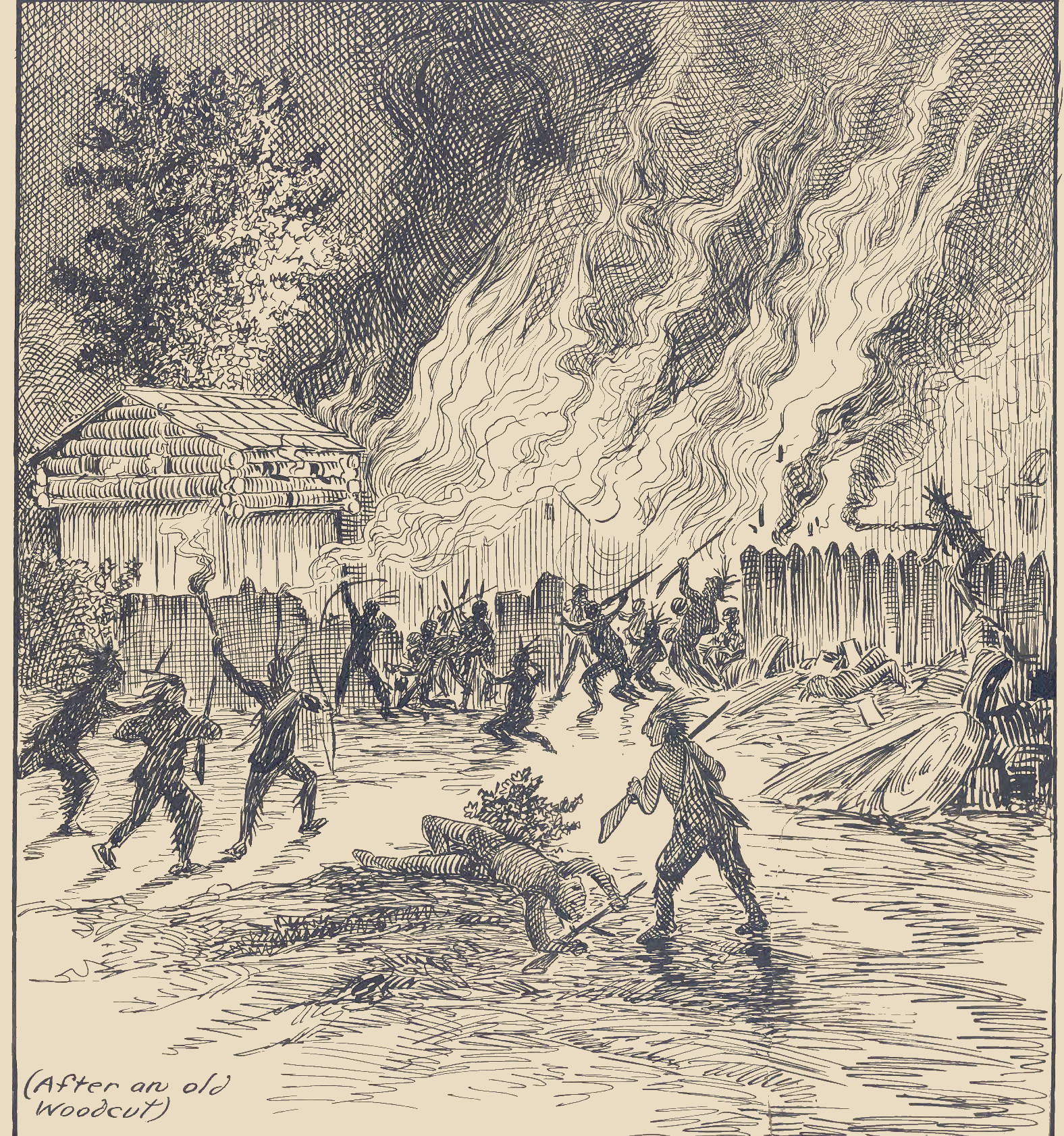
For centuries, the area at the confluence of the St. Marys, St. Joseph, and the Maumee has been a center for regional activity. The rivers offered connections across the continent, facilitating vast trade networks and cultural exchanges between the Myaamia (Miami), Inoka (Illinois), Potawatomi, Wyandot, Shawnee, and many other Native American peoples.[1] Because of this, European invaders immediately recognized the importance of the area. French trappers and explorers began passing through the region as early as the mid-1600s, finding a wealth of furs to feed European markets. They also found tribes already experiencing the impact of European civilization. Smallpox and measles had decimated entire villages while other Native Americans from further east had begun to push west, seeking out more furs to satisfy European demands and land free of white squatters.[2] The French, wishing to solidify their control over the land and prevent the encroachment by English merchants, built the first forts at the three rivers in 1722 (partially destroyed in 1747 by a combined Wyandot and Myaamia attack) and 1750 respectively. Hundreds of packages of furs passed through Fort Miami, raising significant revenue for the French monarchy and arousing English attention.[3]
Following the end of the French and Indian War, Fort Miami would be peacefully handed over to a British garrison for a very brief period. Only around thirty soldiers occupied the post from 1760 until 1763, when the region wide event commonly known as Pontiac’s Revolt led to an attack on the fort. The small garrison was quickly overwhelmed, leaving the area without a long term Euro-American military presence from 1763 through 1794.[4]
The troops of the new United States government would strike the three rivers confluence first in 1791. George Washington’s administration recognized the importance of Kiihkayonki (Kekionga), the Myaamia (Miami) town where the city of Fort Wayne is today, as a regional powerhouse. Tasked with the command of this expedition was Josiah Harmar, issued orders to subdue Native America power in the region. Harmar’s troops were far from crack soldiers however, being a motley crew of destitute militia and untested and regulars.[5]"Amongft the militia were a great many hardly able to bear arms, fuch as old infirm men, and young boys; they were not fuch as might be expected from a froniter country, viz. the fmart active woodfman, well accuftomed to arms, eager and alert to revenge the injuries done them, and their connections. No-there were a great number of them fubftitutes, who probably had never fired a gun."[17]
Opposing them were veteran warriors, with years of experience defending their homes from both Native American and white invaders. The results, of course, were predictable.[6]
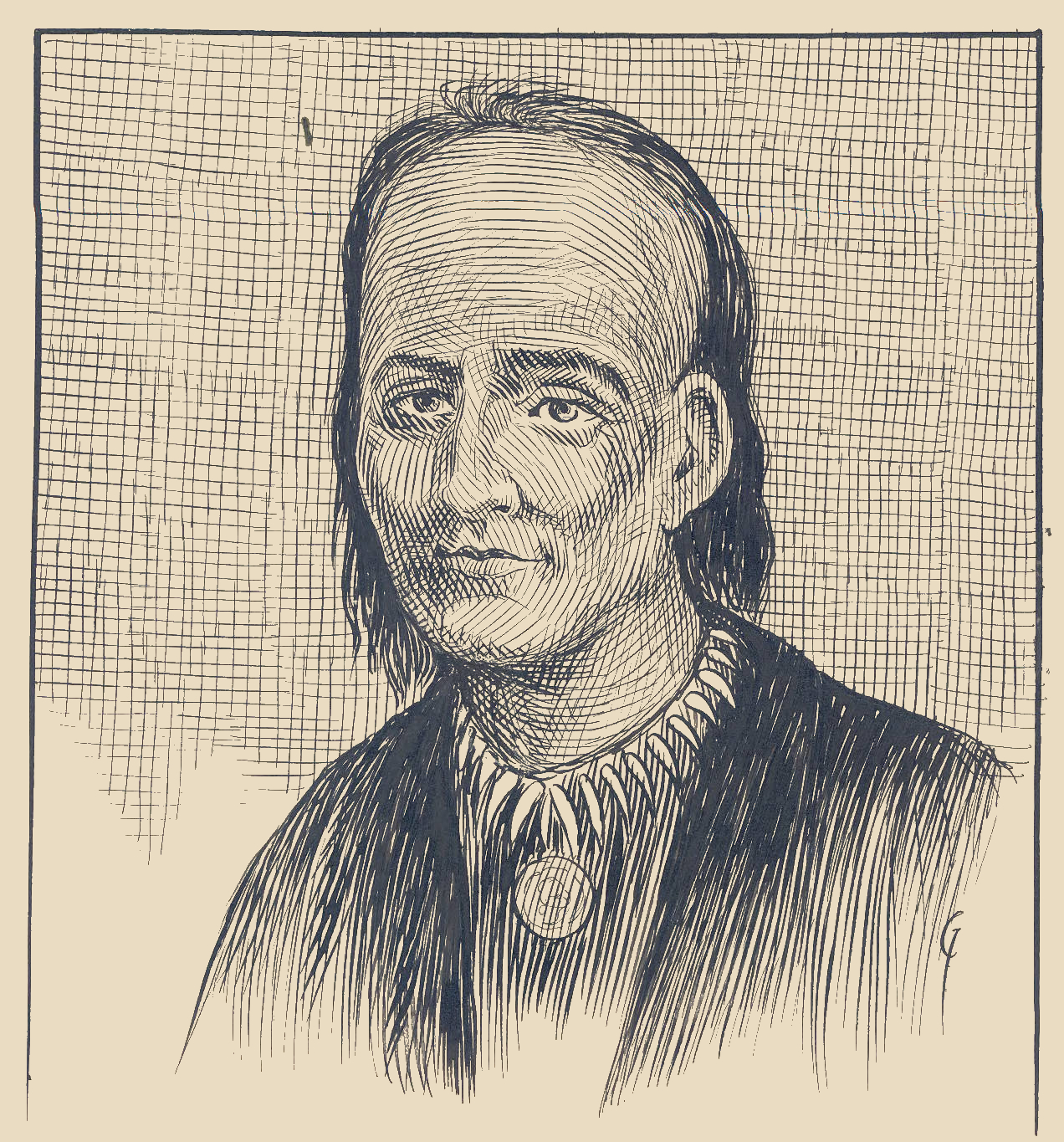
Kiihkayonki (Kekionga) would be destroyed before the U.S. troops arrived on October 17th, 1791, a tactical decision made by Myaamia (Miami) leadership to prevent their own food stores from being used against them. Militia under the command of Harmar quickly lost any semblance of discipline upon arrival to the village, giving the Myaamia (Miami) a chance to steal nearly one hundred packhorses that would be put into immediate use. An experienced and proven Myaamia (Miami) war chief, Mihšihkinaahkwa (Little Turtle), lead the efforts to push back the U.S. forces. The added mobility that the pack horses provided meant that by the end of October nearly two hundred U.S. troops had been killed in a series of carefully planned and executed engagements. Myaamia (Miami) losses were no higher than forty.[7]
This proved to be a massive embarrassment for the fledgling federal government and efforts to avenge Harmar came quickly. Put in command of this next expedition was Arthur St. Clair, territorial governor for the Northwest Territory and a veteran of the Seven Years and the American Revolution. Despite his vast experience, St. Clair was an old man by 1791 and gout often left him crippled in the field.[8] The troops under St. Clair were of the same caliber that Harmar had available, woefully unequipped with some uniforms literally falling apart on the march.[9] In fact, St. Clair’s men would never even reach Kiihkayonki (Kekionga), instead being stopped over fifty miles away. The expedition’s guides were Native Americans captured in raids that were then pressed into service, so it is certainly possible that the army getting lost in the woods was not entirely accidental.[10] By the end of the fighting on November 4th, 1791 the U.S. troops had suffered 64% casualties and were forced to subside on horse meat.[11] The Myaamia (Miami) and their allies suffered negligible losses compared to the 600 dead the U.S. Army had suffered, and did so without any further destruction of their villages or crops.[12]
Despite St. Clair’s campaign never reaching Kiihkayonki (Kekionga), it is important to mention as it sets the stage for what comes next. The U.S. government had suffered two significant defeats with little to show for them. Washington’s administration created a handpicked list of candidates for a new commander and landed on Anthony Wayne. Wayne was another experienced officer, fighting extensively in the American Revolution as the commander of the light infantry division. He was also a fighter, focused on destroying the enemy and negotiating later.[13] Wayne recognized the shortcomings of volunteer militia troops, and opted to focus on developing the small regular army into a well-trained and disciplined force. After months of training, Wayne felt confident to begin pushing west by March of 1793.[14]
Out of all the U.S. campaigns, the Myaamia (Miami) felt their most vulnerable, as the years of constant raiding and warfare had taken a serious toll on the villages. Crops had been destroyed and the harvests that survived were weak, leaving some to rely on food stores from the British, Many key leaders, including Mihšihkinaahkwa (Little Turtle), wanted to use the recent victory over St. Clair to negotiate from a position of strength.[15]
Wayne’s troops were approaching either way, and the climatic battle would occur on a rainy field of fallen trees in western Ohio. August 20th, 1794 the battle of Fallen Timbers commenced and the results were final. Native American losses stood at fifty killed with an unrecorded amount wounded, with U.S. troops losing a largely equal amount at eighty-nine killed and forty-four.[16] U.S. outlets grossly inflated the numbers of Native American deaths as reports began to circulate, but the point was clear: the Northwest Territory had been won.[1] George Ironstrack, “The Myaamia-French Encounter Each Other,” Myaamia Center of Miami University, last modified July 16, 2011, https://aacimotaatiiyankwi.org/2011/07/16/the-myaamia-and-french-encounter-each-other/ .[2] Ironstrack, “The Myaamia-French Encounter Each Other.”[3] Charles Poinsatte, Outpost in the Wilderness: Fort Wayne, 1706-1828 (Fort Wayne: Allen County - Fort Wayne Historical Society, 1976), 7-10.
[4] Poinsatte, Outpost in the Wilderness: Fort Wayne, 1706-1828, 10-12.[5] William Heath, William Wells and the Struggle for the Old Northwest (Norman: University of Oklahoma Press, 2015), 113.[6] George Ironstrack, “The Mihši-maalhsa Wars – Part II,” Myaamia Center of Miami University, last modified March 31, 2014, https://aacimotaatiiyankwi.org/2014/03/31/the-mihsi-maalhsa-wars-part-ii/.[7] Ironstrack, “The Mihši-maalhsa Wars – Part II.”[8] Collin Calloway, The Indian World of George Washington: the First President, the First Americans, and the Birth of the Nation (New York: Oxford University Press, 2018), 316-317.[9] Heath, William Wells and the Struggle for the Old Northwest, 136.[10] George Ironstrack, “The Mihši-maalhsa Wars – Part III,” Myaamia Center of Miami University, last modified May 19, 2014, https://aacimotaatiiyankwi.org/2014/03/31/the-mihsi-maalhsa-wars-part-iii/.[11] Heath, William Wells and the Struggle for the Old Northwest, 150.[12] Ironstrack, “The Mihši-maalhsa Wars – Part III.”[13] Calloway, The Indian World of George Washington: the First President, the First Americans, and the Birth of the Nation, 434.[14] Calloway, The Indian World of George Washington: the First President, the First Americans, and the Birth of the Nation, 436-437.[15] George Ironstrack, “The Mihši-maalhsa Wars – Part IV,” Myaamia Center of Miami University, last modified January 1, 2015, https://aacimotaatiiyankwi.org/2014/03/31/the-mihsi-maalhsa-wars-part-iv/.[16] Ironstrack, “The Mihši-maalhsa Wars – Part IV.”[17] United States Army, Court Of Inquiry, Josiah Harmar, Herman Le Roy Edgar, American Imprint Collection, and Documents Of The First Fourteen Congresses Collection, The proceedings of a Court of Enquiry, held at the special request of Brigadier General Josiah Harmar, to investigate his conduct, as commanding officer of the expedition against the Miami Indians,: the same having been transmitted by Major General St. Clair, to the Secretary of the United States, for the Department of War, (Philadelphia: Printed by John Fenno, 1791) 9.