The Forts of Fort Wayne: Twenty-Five Years of Army Occupation at the Three RiversMain MenuWhy Fort Wayne MattersThe Goals of this ProjectFortifying the RiversThe First American Fort is BuiltA New Century and a New FortThe Second Fort, 1800-1815Statehood SentryThe Third Fort, 1815-1819A Fort RebornPreserving the Past for the Next GenerationCory Balkenbusch1813df9caeea31c6742588d0733c7e303d399f25
War Declared Clipping
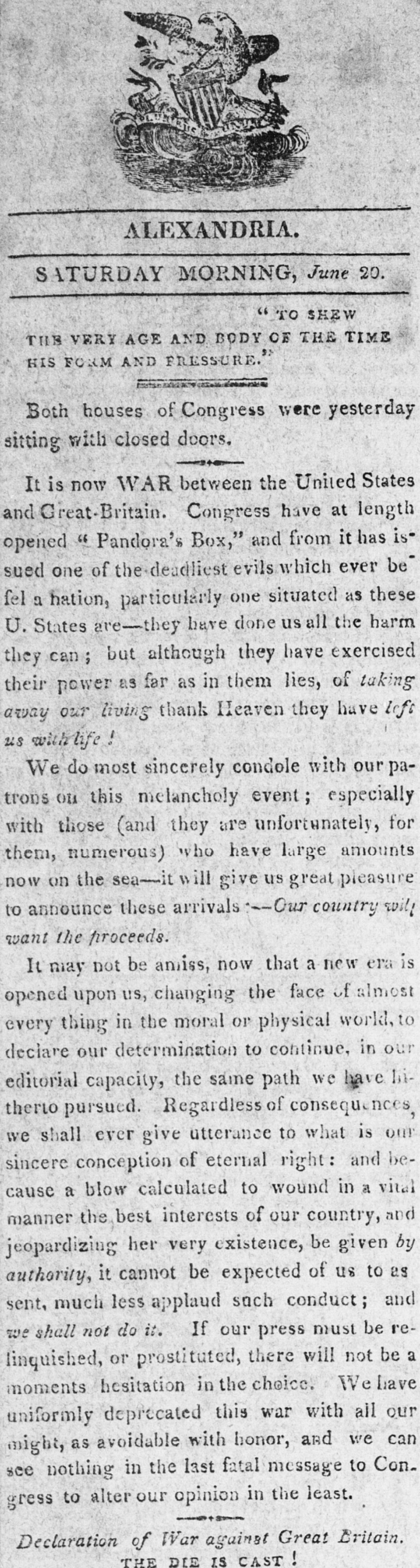
1media/sn84024013 1812-06-20 1 3 image 681x727 from 0x565 to 6019x6992_thumb.jpg2023-03-21T20:43:42+00:00Cory Balkenbusch1813df9caeea31c6742588d0733c7e303d399f2541Reactions to the War of 1812 were decidedly mixed, particularly on the east coast.plain2023-03-21T20:43:42+00:00Alexandria Daily Gazette, Commercial & Political, June 20, 1812. Library of Congress.Cory Balkenbusch1813df9caeea31c6742588d0733c7e303d399f25
1media/1808 Drawing of the Fort.jpg2023-01-11T18:49:15+00:00A New Century and a New Fort9The Second Fort, 1800-1815plain1932023-05-29T23:19:53+00:00Shoddy construction and an understrength garrison had made Wayne’s fort unsustainable by the turn of the century. A new post was needed, and under Colonel Thomas Hunt’s command work began approximately three hundred feet north of the original structure. The new fort would appear much more like a typical picketed frontier fort. Constructed in a rough pentagon shape, there were blockhouses that protected the four outermost corners and a connected via a palisade. The two longer sides of the Fort measured some one hundred and thirty feet long, with separate buildings within the walls for the commander, the officers, and the enlisted men.
Out of all the American forts built at the confluence of the Three Rivers, the 1800 Fort had the most interesting tenure. With significant treaty negotiations like the 1809 Treaty of Fort Wayne, the Quaker mission amongst the Myaamia (Miami) from 1804-1806, and the Fort coming under siege as part of the War of 1812, Hunt’s Fort saw nearly everything a frontier fort could. It was also the longest serving of all the forts, in active army use for fifteen straight years (1800-1815).
This section will address the same four primary areas that the previous section did, highlighting the officers, soldiers, civilians, and Myaamia (Miami) that were influential in the area from 1800-1815. There will also be a section that specifically addresses the siege.